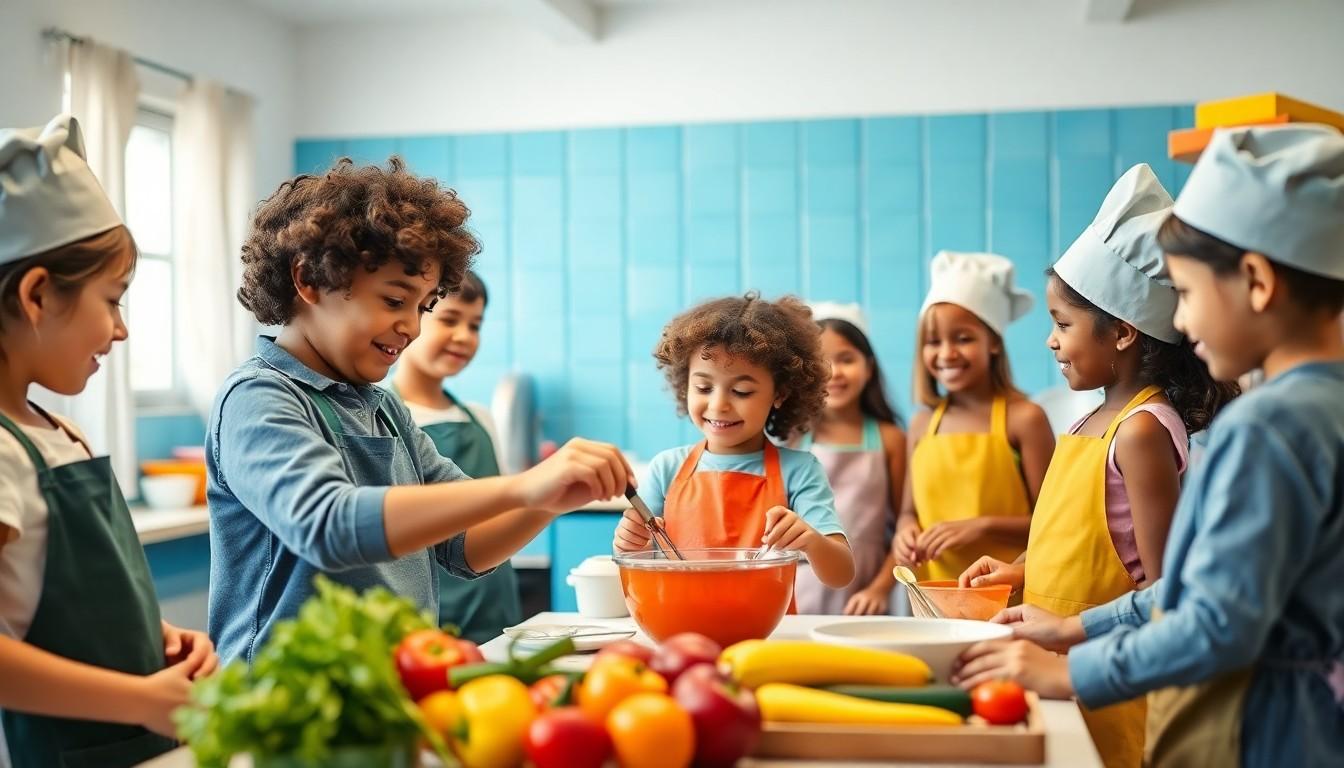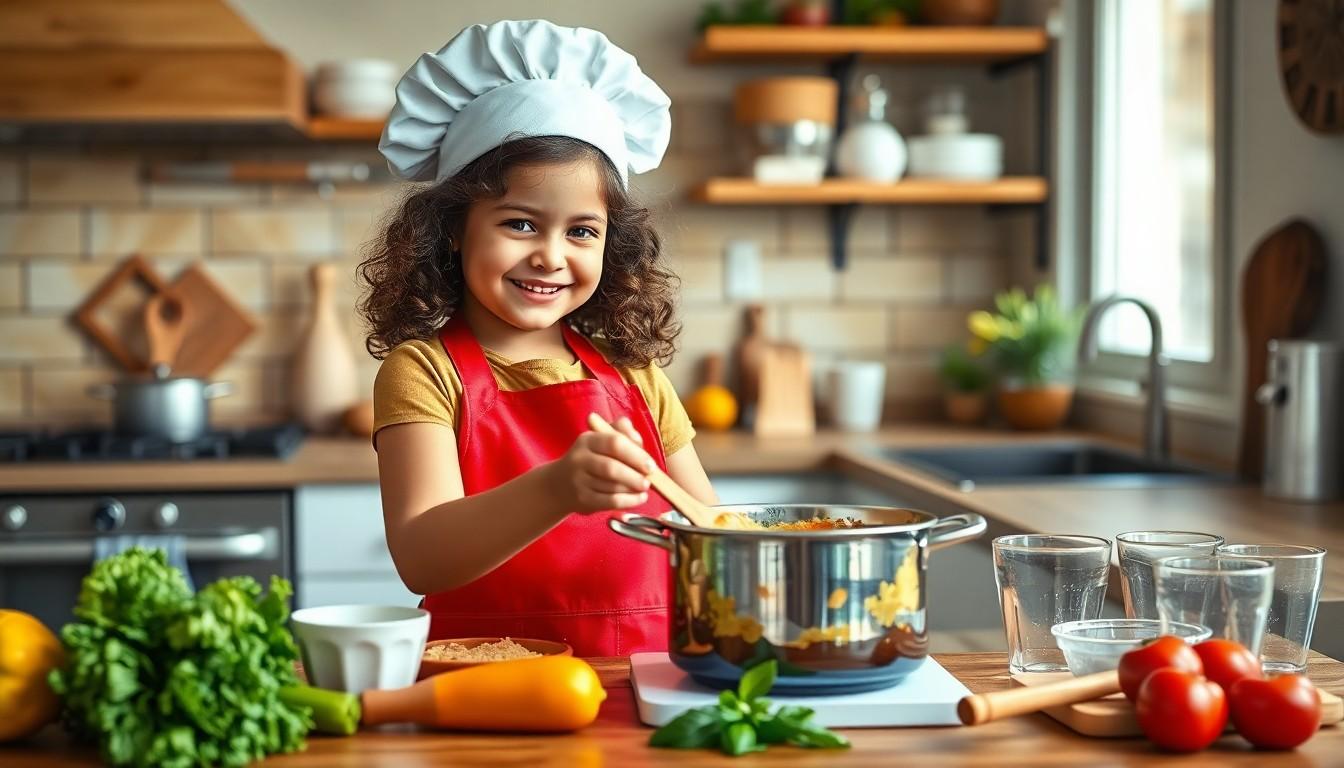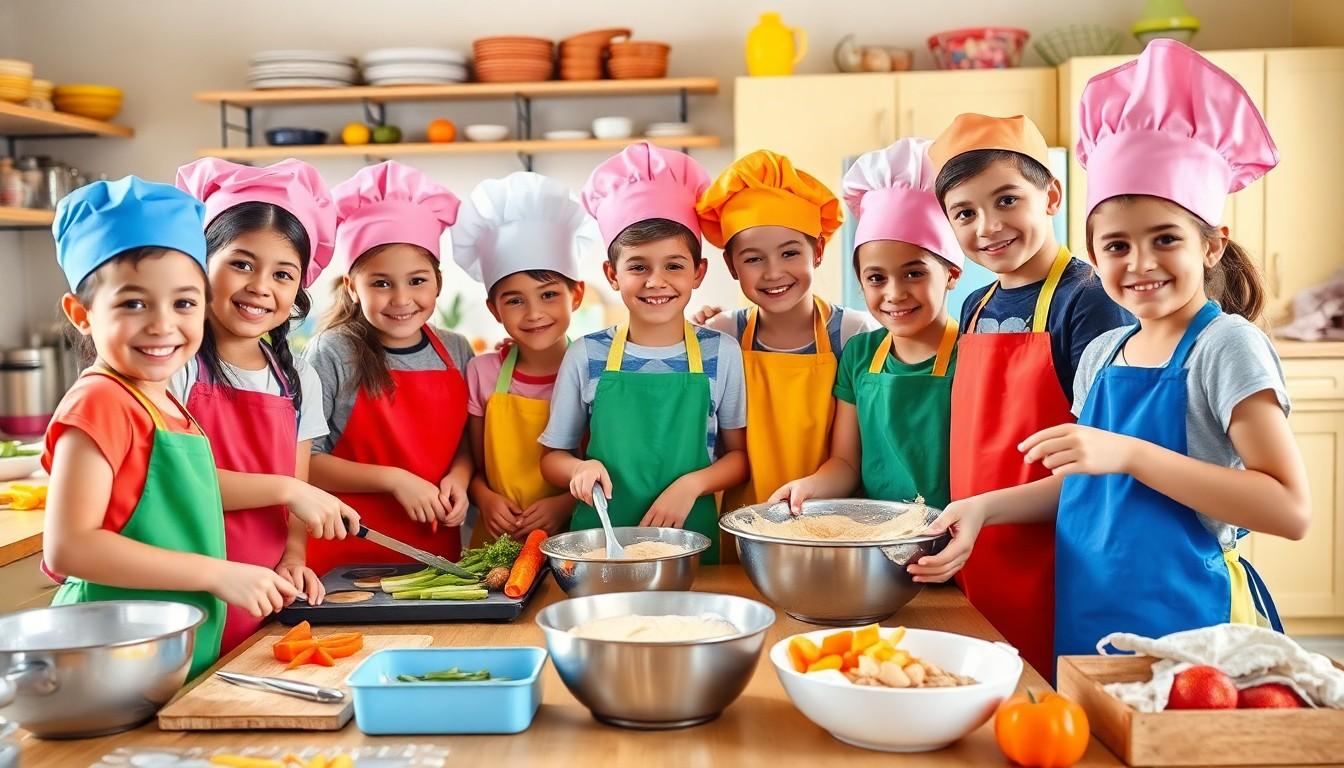
Imagine a place where kids can trade their video games for aprons and spatulas, where culinary creativity is the name of the game. Cooking camp for kids isn’t just about stirring pots; it’s a delicious adventure that turns little chefs into kitchen wizards. With every chop, whisk, and sprinkle, they’ll learn valuable skills while having a blast.
Overview of Cooking Camp for Kids
Cooking camp for kids offers a diverse set of activities designed to foster culinary creativity. Children engage with hands-on experiences, learning essential techniques that range from basic knife skills to more advanced cooking methods. Each day, campers participate in interactive sessions that build confidence and independence in the kitchen.
The camp boasts a variety of themes, ensuring that kids explore different cuisines and flavors. Popular options often include Italian pasta making, Mexican taco nights, and baking pastry essentials. Through themed sessions, children gain insights into global cultures while honing their cooking skills.
Safety is a top priority during the camp. Participants receive instruction on kitchen safety, emphasizing the importance of using tools correctly and maintaining cleanliness. Educators lead lessons on proper food handling and hygiene practices to instill lifelong habits.
Instructors possess extensive backgrounds in both cooking and teaching. They guide children with patience and enthusiasm, ensuring everyone feels included. Individual attention enables each child to progress at their own pace, which contributes to their growth in culinary arts.
Friendship forms through teamwork in varied group activities. Kids work together to create meals, encouraging collaboration and communication skills. This social aspect adds to the enjoyment of the cooking experience.
Parents often receive updates on their child’s progress, allowing them to witness newfound skills. A final showcase event typically gives kids the opportunity to demonstrate their creations to family and friends. Overall, this camp serves as a platform for personal growth, skill development, and fun in the kitchen.
Benefits of Cooking Camps
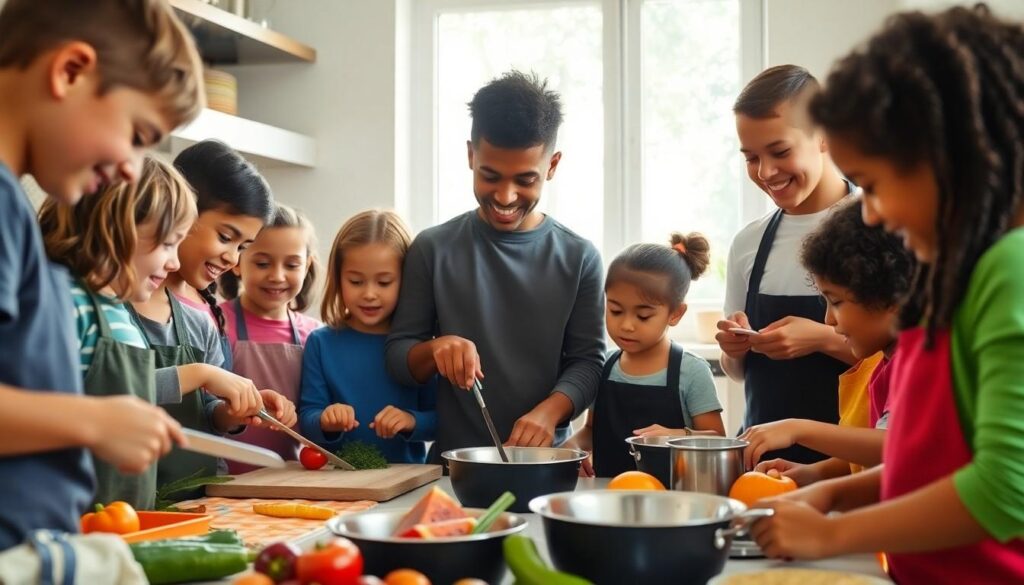
Cooking camps provide numerous advantages for children, promoting essential life skills through hands-on experiences.
Skill Development
Children gain valuable skills in the kitchen while attending cooking camps. They learn fundamental techniques such as knife skills and ingredient measurement. Exposure to various cuisines enhances their culinary knowledge, introducing them to global flavors. Each cooking session focuses on specific dishes, enabling kids to master recipes. Instructors guide children through challenges, fostering problem-solving abilities. Campers also develop teamwork skills through collaborative cooking projects. By the end of the camp, kids often feel more proficient and knowledgeable about meal preparation. Overall, cooking camps serve as a comprehensive platform for honing culinary skills that children will use throughout their lives.
Confidence Building
Cooking camps play a significant role in building children’s confidence. Successfully preparing a dish boosts self-esteem, empowering kids to take pride in their culinary achievements. They receive constructive feedback from instructors, helping them refine their techniques. Navigating kitchen tasks and completing challenges instills a sense of independence. Engaging in themed activities allows campers to express their creativity. Furthermore, showcasing their creations to family and friends cultivates public speaking skills. As a result, children emerge from camp feeling confident in their abilities. Cooking camps foster not only culinary skills but also personal growth that positively impacts children.
Types of Cooking Camps
Cooking camps come in various formats, catering to different preferences and schedules for kids. Understanding these types helps parents make informed choices for their children.
Day Camps
Day camps offer flexible options for busy families. Typically, these camps run during the day, allowing kids to return home in the evening. Engaging cooking classes, themed around different cuisines, provide hands-on learning experiences. Campers learn skills like measuring, chopping, and baking while enjoying fun activities with peers. With a focus on building culinary confidence, day camps create a supportive environment where kids can experiment and explore their creativity. Instructors prioritize safety, ensuring kids understand proper kitchen practices while they cook together.
Overnight Camps
Overnight camps provide an immersive cooking experience, allowing kids to dive deeper into culinary exploration. Campers stay on-site for several days, engaging in extended cooking projects and themed meals. These camps encourage teamwork through collaborative cooking sessions and fosters lasting friendships among peers. Instruction covers a broad range of techniques, from basic skills to gourmet cooking. Immersed in a fun environment, children gain self-reliance and independence. Parents appreciate the structured schedule, which keeps kids active and engaged while learning valuable life skills.
Activities at Cooking Camps
Cooking camps offer a variety of engaging activities that cultivate culinary skills and promote teamwork. Kids experience hands-on learning, fostering creativity while having fun.
Cooking Classes
Cooking classes form the core of the camp experience. Each session features a different cuisine, allowing children to explore flavors and techniques unique to various cultures. Youth learn fundamental skills like chopping vegetables, measuring ingredients, and using kitchen tools safely. Instructors guide them through pasta making, baking bread, and preparing healthy snacks. Children leave each class not only with new recipes but also with a deeper appreciation for different cuisines. Confidence in the kitchen enhances as campers try their hand at dishes from around the world.
Team-Building Exercises
Team-building exercises boost collaboration among campers. Group cooking projects enhance communication and foster relationships. Often, children work together to create meals, share responsibilities, and problem-solve when challenges arise. These activities teach kids the importance of teamwork and patience in a kitchen environment. Campers learn to value diverse perspectives, motivating them to listen and support each other. Stronger friendships develop as children share the joy of cooking, reinforcing the camp’s engaging atmosphere.
Choosing the Right Cooking Camp
Selecting the appropriate cooking camp involves considering various aspects that align with a child’s interests and developmental goals. Researching the camp’s thematic focus aids in understanding what culinary skills children will learn. Look into the camp’s curriculum to see if it covers a range of cuisines, like Italian and Mexican, ensuring a well-rounded experience.
Instructors play a vital role; verify their qualifications and teaching backgrounds. Engaging educators enhance learning by providing individual attention and support, enabling kids to progress at their own pace. Safety protocols are also crucial. Camps should emphasize kitchen safety, proper food handling, and hygiene practices as foundational principles.
Communication with camp organizers fosters understanding of the camp’s structure and safety measures. Inquire about structured schedules that keep kids active and engaged throughout the day. Flexible options, such as day or overnight camps, cater to different family needs while maintaining a focus on culinary skill development.
Additionally, consider the camp’s approach to teamwork. Programs that promote group activities cultivate collaboration and communication skills among campers. Engaging in team-building exercises creates an enjoyable learning environment where kids support one another.
Parents should expect regular updates on their child’s progress. Information on individual achievements provides insight into skill development and builds excitement leading up to the final showcase event. Ultimately, a well-chosen cooking camp not only promotes cooking skills but also enhances personal growth and self-confidence.
Conclusion
Cooking camps for kids offer an exciting blend of fun and education. They provide a unique opportunity for children to step away from screens and immerse themselves in the culinary arts. With hands-on activities and expert guidance, kids not only learn essential cooking skills but also build confidence and teamwork.
These camps create a supportive environment where children can explore diverse cuisines and develop a passion for cooking. The final showcase event serves as a perfect culmination of their hard work, allowing them to share their culinary creations with family and friends. Ultimately, cooking camps are a fantastic way for kids to grow personally and creatively while enjoying the rewarding experience of cooking.