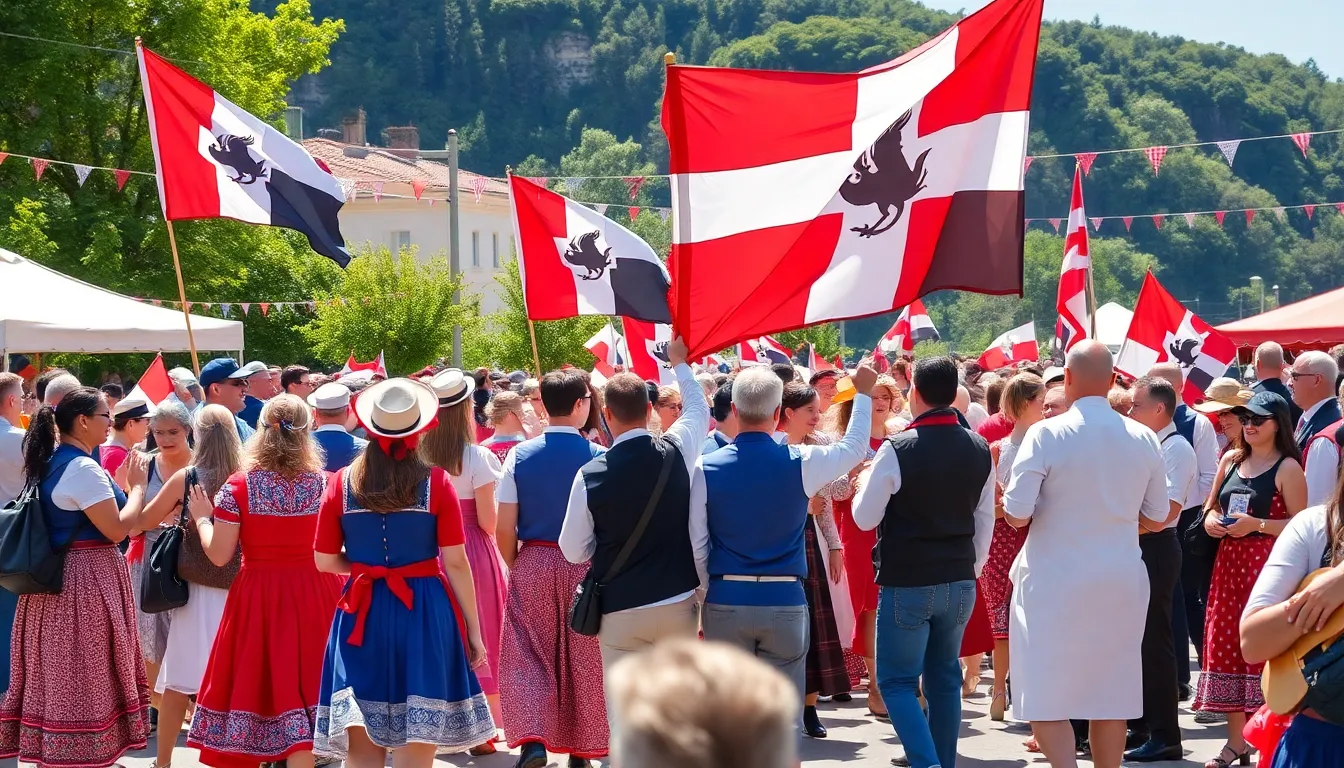
The Basque separatist movement represents one of Europe’s longest-running independence struggles, with roots dating back centuries in the unique cultural region spanning northern Spain and southwestern France. For decades, organizations like ETA (Euskadi Ta Askatasuna) have fought—sometimes violently—for Basque autonomy and independence from Spain.
Today’s Basque separatism has evolved significantly from its militant past. While ETA formally disbanded in 2018 after a controversial 60-year campaign, the political movement continues through democratic channels. The region now enjoys substantial autonomy, with its own parliament, police force, and control over taxation—making it one of Spain’s most independent regions despite ongoing tensions.
The Rise of Basque Separatism: Historical Origins
Basque separatism emerged from centuries of cultural distinction and political marginalization. The movement’s roots trace back to the erosion of traditional Basque rights and the region’s forced integration into the modern Spanish state, creating tensions that eventually sparked organized resistance.
The Basque Identity and Cultural Roots
The Basque people possess one of Europe’s oldest and most distinctive cultural identities, with origins predating the Roman Empire. Their language, Euskara, shares no linguistic roots with any Indo-European language, creating a powerful marker of their unique heritage. Basque cultural traditions—including rural sports like stone lifting, traditional dances such as the aurresku, and distinctive culinary practices—reinforced this separate identity throughout centuries.
Medieval Basque territories operated under special legal frameworks called “fueros,” granting significant autonomy in governance and taxation. These ancient rights formed the historical basis for later separatist claims. The industrialization of the Basque region in the late 19th century created economic strength that further empowered cultural nationalism, laying groundwork for political movements seeking to preserve Basque distinctiveness against centralization efforts from Madrid.
Franco’s Dictatorship and Basque Repression
Francisco Franco’s fascist regime (1939-1975) unleashed unprecedented repression against Basque identity following the Spanish Civil War. The dictatorship banned the Basque language in public spaces, schools, and media, forcing many families to teach Euskara secretly at home. Cultural expressions including traditional music, dance, and literature faced systematic suppression as Franco implemented policies designed to eliminate regional identities.
Bilbao and other Basque cities experienced particularly harsh treatment due to their Republican loyalties during the Civil War. Mass arrests, torture, and executions targeted Basque nationalists and leftists throughout Franco’s rule. Economic policies favored Spanish-owned enterprises while undermining traditional Basque economic structures. This severe repression paradoxically strengthened Basque nationalism rather than destroying it, driving resistance underground and radicalizing younger generations. ETA (Euskadi Ta Askatasuna—”Basque Homeland and Liberty”) formed in 1959 specifically as a response to these oppressive conditions, marking a decisive turn toward militant separatism.
ETA: The Militant Basque Separatist Movement
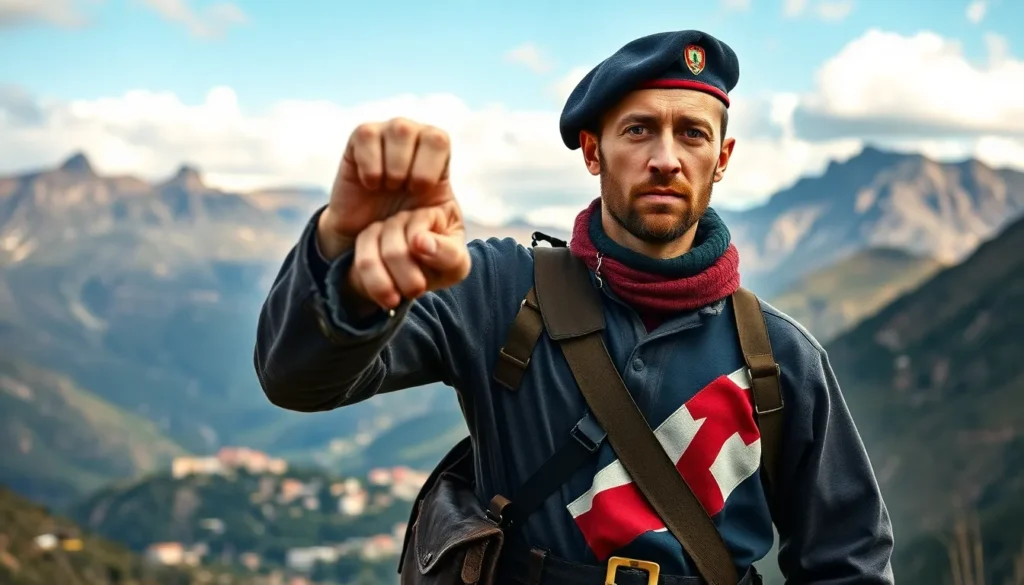
ETA (Euskadi Ta Askatasuna, meaning “Basque Homeland and Liberty”) emerged as the most radical expression of Basque nationalism during Franco’s dictatorship. The organization operated as an armed separatist group for nearly six decades, becoming one of Europe’s longest-running terrorist organizations before its dissolution in 2018.
Formation and Early Activities
ETA formed on July 31, 1959, when a group of radical students from the Basque Nationalist Party (PNV) youth wing broke away to create a more militant organization. These founding members, frustrated by what they perceived as the PNV’s passive approach to Franco’s oppression, embraced revolutionary armed struggle as their primary strategy. ETA’s initial activities focused on propaganda, sabotage, and symbolic protests against the regime.
The group’s first planned violent action occurred in 1961, attempting to derail a train carrying Franco supporters, though this effort failed. ETA’s ideological foundation combined Basque nationalism with Marxist revolutionary principles, creating a movement that viewed violence as a legitimate response to state repression. By the late 1960s, ETA had developed a structured military wing and begun targeted assassinations, with their first planned killing—of police commissioner Melitón Manzanas—taking place in 1968.
Key Campaigns and Attacks
ETA’s most significant attack occurred on December 20, 1973, when they assassinated Admiral Luis Carrero Blanco, Franco’s prime minister and expected successor. The operation, codenamed “Operación Ogro,” involved tunneling under a Madrid street and detonating explosives as Carrero Blanco’s car passed overhead, launching the vehicle over a building. This attack dramatically altered Spain’s political trajectory during its transition to democracy.
Throughout the 1980s and 1990s, ETA conducted bombings, kidnappings, and assassinations targeting Spanish police, military personnel, politicians, and civilians. The 1987 Barcelona Hipercor bombing killed 21 shoppers and injured 45 others, marking one of their deadliest attacks. Between 1968 and its final ceasefire in 2011, ETA killed approximately 850 people and injured thousands more. The group announced a permanent ceasefire in 2011, disarmed in 2017, and formally dissolved in 2018, acknowledging the failure of its violent campaign to achieve an independent Basque state.
Political Wings of the Basque Separatist Movement
The Basque separatist movement operates through various political organizations that have evolved over decades. These political wings have provided the ideological framework and democratic channels for advancing Basque nationalist goals outside the realm of militant action.
Herri Batasuna and Related Organizations
Herri Batasuna emerged in 1978 as the political face of the radical Basque independence movement, functioning as ETA’s political arm while maintaining a policy of abstention from Spanish institutions. The party faced multiple legal challenges, including a 2003 ban by Spain’s Supreme Court for its links to terrorism. Sortu, founded in 2011, replaced Herri Batasuna as a left-wing pro-independence party explicitly rejecting violence. EH Bildu, a coalition formed in 2012, united several left-wing nationalist groups and currently holds significant representation in the Basque Parliament. Prominent figures like Arnaldo Otegi have transitioned from militant backgrounds to legitimate political leadership, advocating for independence through democratic means rather than armed struggle.
Evolution of Political Strategy
Basque separatist political strategy has transformed dramatically from confrontation to participation in democratic institutions. During the 1980s-90s, radical nationalists boycotted Spanish institutions while supporting ETA’s armed campaign. The 1998 Lizarra-Garazi Agreement marked a pivotal shift as separatist parties began exploring peaceful alternatives to violence. Following ETA’s permanent ceasefire in 2011, nationalist parties embraced electoral politics, participating in local, regional, and national elections. Today’s strategy centers on building broad political coalitions that advocate for increased self-determination through referendums. Modern Basque parties emphasize practical autonomy gains over immediate independence, focusing on expanding economic control, cultural rights, and self-governance. This pragmatic approach has yielded greater political influence while maintaining the long-term goal of sovereignty.
International Response to Basque Separatism
The Basque separatist movement has attracted significant international attention throughout its history, with varying responses from governments, organizations, and public figures worldwide. These reactions have shaped both the movement’s strategies and its international legitimacy over decades of political evolution.
Spanish Government Approaches
Spanish governmental responses to Basque separatism have evolved dramatically since Franco’s dictatorship. During the transition to democracy, the 1978 Constitution recognized Basque autonomy while maintaining Spain’s territorial integrity as non-negotiable. The Socialist government under Felipe González established the Anti-terrorist Liberation Groups (GAL) in the 1980s, conducting illegal “dirty war” operations against ETA members. José María Aznar’s administration (1996-2004) pursued a hardline approach, rejecting negotiations and strengthening anti-terrorism laws. In contrast, José Luis Rodríguez Zapatero attempted peace talks in 2006, which collapsed after an ETA bombing at Madrid’s Barajas Airport. More recently, successive governments have acknowledged ETA’s disarmament and dissolution while maintaining firm opposition to independence referendums, preferring bilateral negotiations on expanding autonomous powers within the constitutional framework.
European and Global Perspectives
European institutions have maintained a delicate balance regarding Basque separatism, condemning ETA’s violence while supporting democratic solutions. The European Union designated ETA as a terrorist organization in 2001, enabling greater cross-border cooperation in counter-terrorism efforts between Spain and France. French authorities shifted from offering tacit sanctuary to ETA members in the 1970s to active cooperation with Spanish security forces by the 1990s, conducting joint operations that significantly weakened the organization. International bodies like the United Nations have generally respected Spain’s territorial integrity while occasionally criticizing human rights abuses in anti-terrorism operations. The Basque diaspora in countries such as Argentina, the United States, and Belgium has played a crucial role in internationalizing the movement’s aspirations, establishing cultural centers that promote awareness of Basque identity and political concerns beyond Spain’s borders.
The Peace Process and Ceasefire Developments
The Basque peace process represents a complex journey marked by negotiations, setbacks, and eventual progress toward ending decades of violence. Multiple parties participated in these developments, including the Spanish government, international mediators, and various Basque political factions, ultimately leading to ETA’s permanent ceasefire and eventual dissolution.
Negotiations and Failed Attempts
Peace negotiations between ETA and Spanish authorities began as early as 1989 in Algiers but collapsed after just three months. The 1998-1999 ETA ceasefire, inspired by Northern Ireland’s peace process, ended abruptly when the organization resumed attacks, claiming the government failed to make political concessions. A significant attempt occurred in 2005-2006 when Prime Minister José Luis Rodríguez Zapatero initiated secret talks with ETA, culminating in a “permanent ceasefire” declaration. This effort crumbled in December 2006 when ETA bombed Madrid’s Barajas Airport, killing two people. International involvement increased during these periods, with mediators from Switzerland, Norway, and other countries facilitating dialogue between parties. Each failed attempt nevertheless built essential foundations for the eventual peace process.
The 2011 Permanent Ceasefire
ETA announced a permanent ceasefire on January 10, 2011, marking a pivotal turning point in the Basque conflict. International verification teams confirmed the ceasefire’s implementation, lending credibility to the organization’s commitment. The announcement followed the October 2011 Aiete International Peace Conference in San Sebastián, where prominent figures including Kofi Annan and Gerry Adams called for a definitive end to armed conflict. Political developments strengthened this peace initiative, particularly the legalization of Sortu and other nationalist parties that explicitly rejected violence. Spanish security forces maintained pressure on ETA during this period, arresting key operatives and dismantling weapon caches. Basque civil society played a crucial role through mass demonstrations demanding peace and reconciliation. Unlike previous ceasefires, this declaration led directly to ETA’s disarmament in 2017 and formal dissolution in 2018.
Modern Basque Nationalism and Autonomy
Basque nationalism has evolved dramatically in the 21st century, shifting from militant activism to democratic participation within Spain’s constitutional framework. The region now enjoys substantial autonomy while maintaining a distinct cultural identity that continues to inspire political movements for greater self-determination.
Current Political Landscape
The Basque Country’s political scene centers around several key parties representing various nationalist positions. PNV (Basque Nationalist Party) dominates as a center-right moderate nationalist force, controlling the Basque government since 2012 and promoting increased autonomy without pursuing immediate independence. EH Bildu, the left-wing pro-independence coalition, serves as the second-largest political force, advocating for sovereignty through democratic channels. These parties operate within the framework of the 1979 Statute of Autonomy, which grants the region control over taxation, education, healthcare, and policing through the Ertzaintza (Basque police force). Recent years have witnessed increased cooperation between Madrid and Basque authorities, resulting in transfers of additional powers and fiscal agreements that give Basque institutions unprecedented economic control. Nationalist parties hold 75% of seats in the Basque Parliament, demonstrating the movement’s continued significance despite its transformation.
Cultural Renaissance and Identity
Euskara, the ancient Basque language once threatened with extinction under Franco, has experienced remarkable revitalization through immersion schools called ikastolas. Enrollment in Basque-medium education has increased 300% since the 1980s, with 60% of students now receiving instruction primarily in Euskara. Cultural festivals celebrating Basque traditions attract thousands of participants annually, including bertsolari poetry competitions and rural sports events like stone lifting and wood chopping. Contemporary Basque cuisine has gained international recognition, with San Sebastián boasting the highest concentration of Michelin-starred restaurants per capita in Europe. Basque media outlets, including EITB (Euskal Irrati Telebista), broadcast extensively in the Basque language, reaching 800,000 daily viewers. Athletic Bilbao’s unique policy of fielding only Basque players symbolizes regional pride while competing successfully in Spain’s top soccer league. This cultural renaissance strengthens Basque identity while fostering a sense of belonging that transcends political divisions.
Conclusion
The Basque separatist movement represents one of Europe’s most remarkable political transformations. From ETA’s violent campaign to today’s democratic advocacy, Basque nationalism has matured significantly while preserving its core identity.
Today’s movement balances practical autonomy with aspirations for greater self-determination. The region thrives with its distinct parliament, fiscal arrangements and revitalized cultural traditions – from the resurgence of Euskara to internationally acclaimed cuisine.
The peace process demonstrates how entrenched conflicts can evolve toward resolution through civil society engagement and political compromise. As Basque nationalism continues its democratic journey, it stands as a powerful example of how cultural identity can find expression through institutional channels rather than violence.