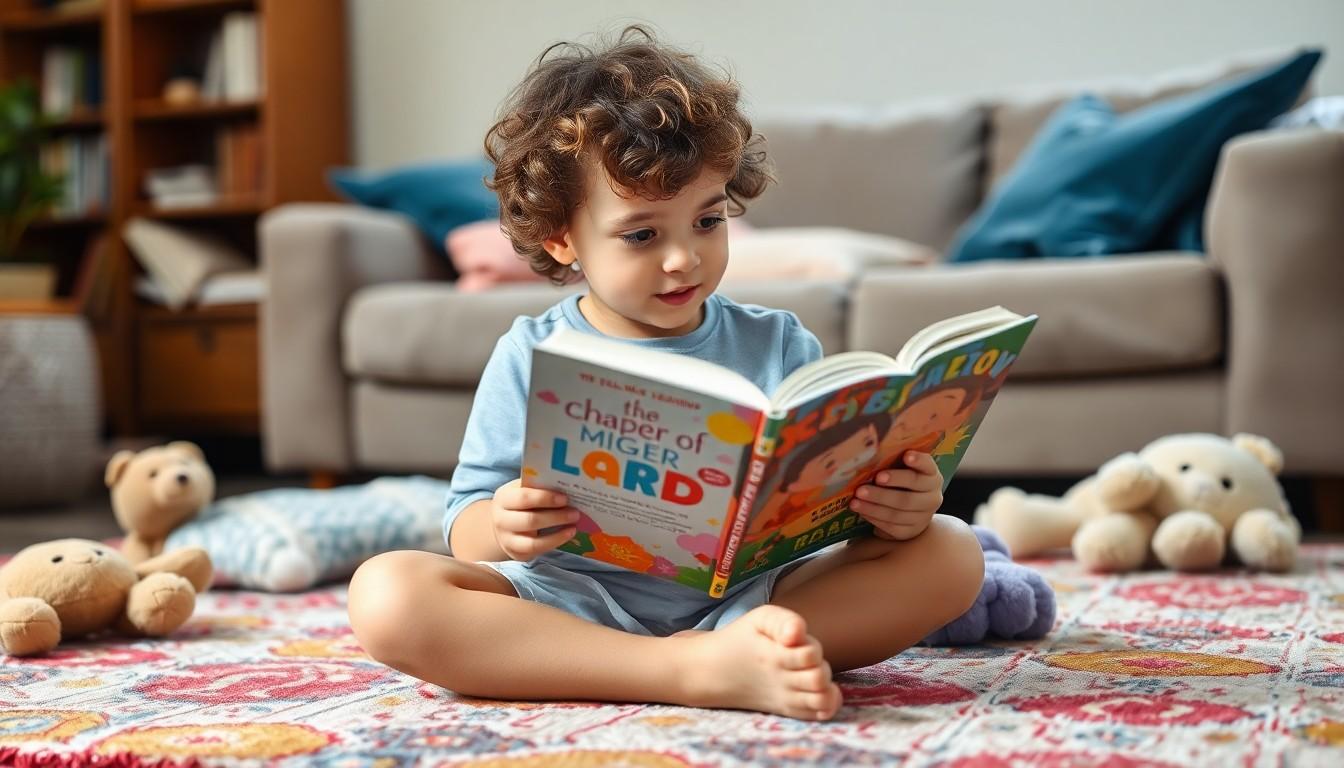
Every parent dreams of the day their little one dives into a world of adventure, mystery, and maybe a dragon or two. But when do kids actually start reading chapter books? It’s a rite of passage that can feel as elusive as finding a unicorn in the backyard.
Understanding Chapter Books
Chapter books represent a key step in a child’s reading journey, bridging the gap between early readers and more complex literature. These books typically cater to children aged 6 to 9 years.
Definition of Chapter Books
Chapter books are defined as early transitional texts intended for newly independent readers. These books often feature illustrations but focus on text more than picture books. They generally contain several chapters, which helps children practice reading longer narratives. Readers encounter varied themes, characters, and plots within these books, enhancing their understanding of storytelling. Common titles in this category include classics like Magic Tree House and Junie B. Jones.
Difference Between Chapter Books and Picture Books
Chapter books differ significantly from picture books in format and content. Picture books focus primarily on illustrations, with limited text suited for very young children. In contrast, chapter books have more expansive narratives with less emphasis on pictures. Readers engage with more complex storylines and character development as they navigate chapter books. While picture books often cater to ages 0 to 5, chapter books appeal to older children, fostering increased literacy and comprehension skills.
Age Range for Reading Chapter Books

Children typically begin reading chapter books between ages 6 and 9. This age range marks a significant milestone in their literacy journey, as they transition from simple picture books to more complex narratives.
Typical Starting Age
Most kids start reading chapter books around 6 years old. By this age, many have developed basic reading skills and show interest in stories with longer text formats. Some children, however, might begin earlier at age 5. Others may take longer and start at age 7 or beyond. Individual differences in readiness can vary, highlighting the importance of patience in this developmental stage.
Factors Influencing Reading Age
Several factors influence when children start reading chapter books. Parental involvement plays a critical role, as reading together can motivate children. Exposure to books at an early age also matters, helping children build foundational literacy skills. Additionally, personal interest in story themes and characters can affect the age at which they embrace chapter books. Lastly, educational environments, such as schools and libraries, impact access to suitable reading material, guiding children toward chapter books when they are ready.
Signs That Your Child Is Ready
Recognizing when a child is ready to start reading chapter books involves observing specific signs.
Interest in Stories
A keen interest in stories signals readiness. Children often express excitement when parents read aloud. They may ask questions about characters or plot points, indicating engagement. Prior knowledge from picture books enhances this interest. When kids start sharing their thoughts about stories, they showcase emerging analytical skills. Notably, a desire to hear longer tales can emerge. This enthusiasm for narrative can lead them toward chapter books.
Ability to Understand Simple Plots
Understanding simple plots marks another readiness indicator. Children demonstrate comprehension by retelling stories they hear. If a child can identify main characters and outline basic storylines, they exhibit foundational narrative skills. Moreover, discussing themes or moral lessons suggests deeper understanding. As plot complexity increases, so does their ability to follow along. Familiarity with books featuring straightforward narratives can boost confidence. Overall, these skills enable children to tackle the more complex structures found in chapter books.
Selecting the Right Chapter Books
Choosing the right chapter books plays a crucial role in a child’s reading journey. It helps to match the content with the child’s interests and reading level.
Suggested Titles for Early Readers
Books like “Charlotte’s Web” and “The Boxcar Children” captivate young readers with engaging stories. Series such as “Magic Tree House” and “Junie B. Jones” offer adventure and humor, appealing to children’s imaginations. Authors like Roald Dahl and Beverly Cleary create memorable characters and relatable experiences, inviting kids to explore their worlds. “Amari and the Night Brothers” introduces fantasy elements, sparking curiosity and excitement. Ensuring selections cater to children’s varied tastes supports their confidence and interest in reading.
Tips for Choosing Age-Appropriate Books
Start by checking the book’s reading level, focusing on texts designed for ages 6 to 9. Consider illustrations; books with colorful pictures alongside text enhance understanding and maintain engagement. Explore themes that resonate with the child’s interests. Asking for recommendations from teachers or librarians can lead to excellent choices. Review online resources and booklists that rank age-appropriate literature, helping to guide decisions. Engaging in discussions about preferred subjects can also strengthen the connection between the child and their books.
Conclusion
Starting the journey into chapter books is a thrilling milestone for children and parents alike. This transition marks a significant step in developing literacy skills and fostering a love for reading. By recognizing signs of readiness and selecting engaging titles that match a child’s interests, parents can support their young readers effectively.
As children navigate longer narratives and complex themes, they build confidence and comprehension skills that will serve them well in their reading journey. With patience and encouragement, parents can help their children unlock the magic of chapter books, paving the way for a lifelong passion for literature.